
An XML snapshot shows the future XML result structure. The input may be a CSV table, XLSX, JSON or another format; this step defines what the final XML export will look like.
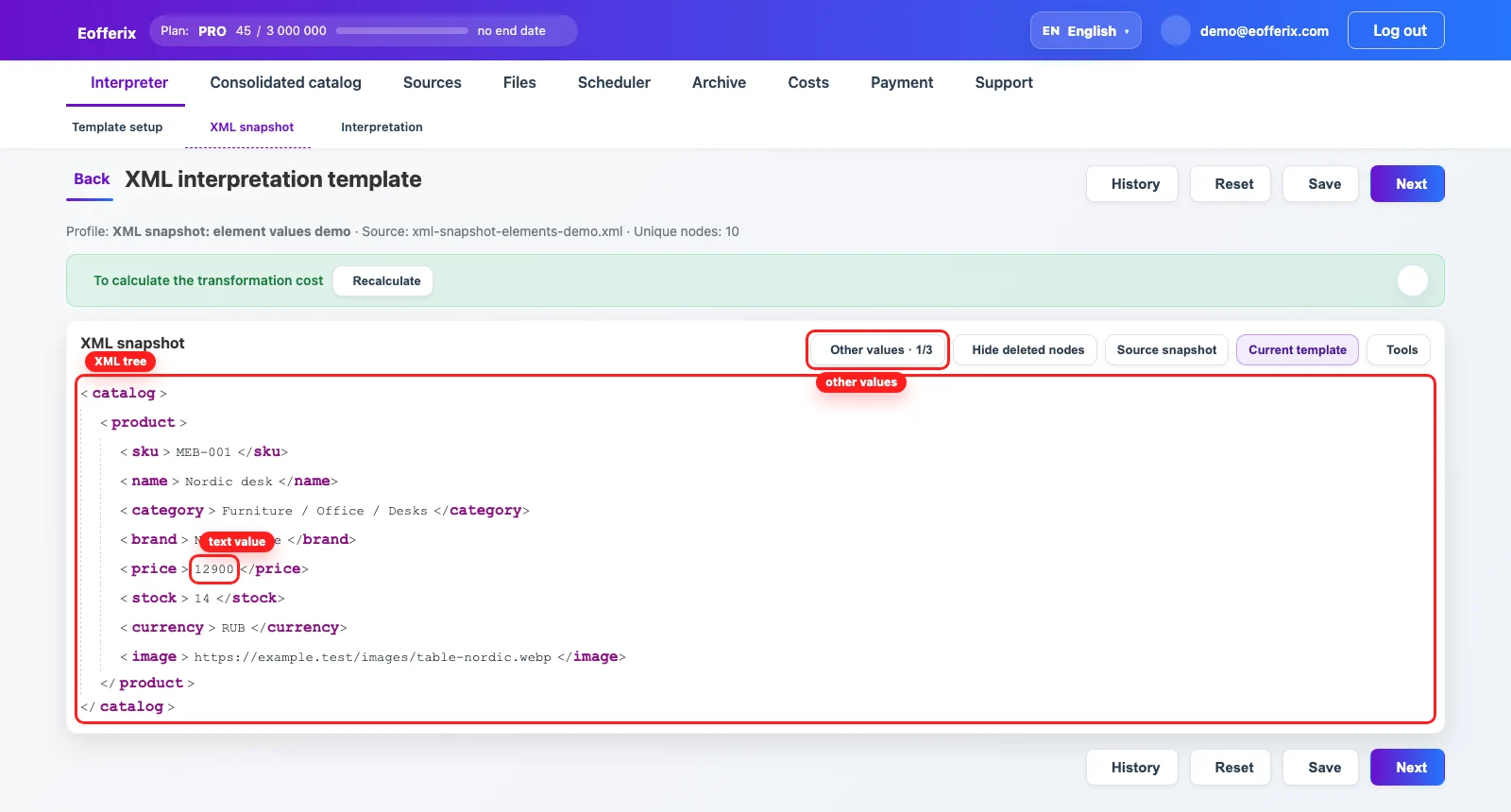
The screen shows a short sample of the XML result structure built from the source. It contains unique elements of the future document and values that help check the setup.
How To Read The XML Snapshot
Indentation shows element nesting. Opening and closing tags form a container, while the text between them becomes a value that can be passed to the final format.
- the top element shows the root of the future document;
- the repeated product element helps identify which part of the result is processed as a record;
- text values can be mapped to result fields and transformed;
- Other values shows examples from neighboring products or records;
- Current template shows the structure that will be saved in the profile.
Value Settings

Click a text value to open its settings. There you define transformations, export conditions and additional rules for the selected field.
- transformations change text or numbers before writing them to the final file;
- export conditions help exclude empty or unsuitable values;
- price usually needs cleanup, markup and rounding;
- a name can be built from several neighboring elements;
- after edits, save the template and check several values through Other values.
Transformations In The XML Snapshot

Value settings can contain a chain of rules and export conditions. In the example, one field prepares the price, another condition filters unavailable records, and a new result element builds a title from several source values.
- for
price, add Multiply with1.2, then Round to1; - in Export conditions, check
stockwith Greater than0for the whole row or record, so stock-zero items are not exported; - create a
Titleelement and build it with Replace with for product name plus SKU, then Add to end only when Warranty is Not empty.